GameFlux
Custom casino software development

GameFlux Custom Casino Software Development

Build a casino platform around your own product requirements with GameFlux. Custom development covers UX/UI, frontend and backend engineering, administrative tools, and the agreed game and payment integrations. The result is a defined software delivery with source-code handover and ownership terms, supported by a specification and staged acceptance.

Custom casino software development

Custom development is most useful when the product needs more than branding on an existing platform. You may require a distinct player journey, unusual promotional logic, different staff workflows or control over how the application evolves. Start by identifying those requirements and testing whether they justify a bespoke build. A conventional launch can still be better served by turnkey software.

The basics

Custom Casino Software Explained

A custom casino platform is an application designed and implemented for an agreed set of operator requirements. It includes the player-facing experience, backend logic and tools used by the operating team. The project specification defines how these parts behave, which external services they use and what counts as a complete delivery.

Ownership is a central part of the model. GameFlux delivers the project source code and the intellectual property rights agreed for the custom work. That gives you a basis for future maintenance and development with your chosen team. It does not transfer ownership of a game studio, payment service or third-party library, and it does not remove the cost of operating the application.

What you get

What You Receive in the Base Build

The build begins with a written specification. These core areas describe the delivery framework; their exact behaviour and acceptance criteria are agreed for your project, together with the integrations needed for launch.

Desktop and mobile UX/UI

Design the lobby, account area and payment journeys around your brand and user requirements. Review real screens and interactions before implementation.

Frontend and backend development

Build the player interface and server-side application against the agreed specification, including the rules that connect accounts, games and transactions.

Administrative tools

Create the workflows needed to manage users, balances, promotions, payment operations and activity records. Define what each operational role must be able to do.

Bonus functionality

Implement the agreed welcome offers and promotional mechanics. Specify eligibility, limits and the relationship between bonus balances and game activity.

Role-based access

Define staff permissions around responsibilities, separating routine support tasks from sensitive account, payment and configuration actions.

Localization foundations

Plan language, currency and regional configuration in the application structure. Confirm the languages and content required for the first release.

Security and anti-fraud scope

Define protective controls and review workflows for the project. Agree the testing and assessment work instead of treating a feature label as a security guarantee.

Deployment preparation

Prepare the agreed environments, release process and production configuration, with launch checks and responsibilities documented before handover.

For each component, define a practical acceptance scenario. An admin panel is not complete merely because its screens exist; your team must be able to perform the required tasks with the correct permissions and reliable records. The same principle applies to player accounts, promotions and payment workflows.

Core systems

Games and Payments: The Two Systems That Make a Casino Work

Game content and payments are separate integrations that meet at the player account and wallet. Name the intended suppliers early, establish which services are available to the project and include their onboarding dependencies in the delivery plan.

For content, choose direct provider connections, an aggregation layer or a combination that fits the catalogue. GameFlux also offers a game aggregator for access to its provider network. Confirm the titles, currencies and session requirements for the build rather than assuming every external API works in the same way.

For payments, define the cashier journey, supported currencies and how deposits and withdrawals are reflected in the account. Fiat and cryptocurrency requirements should be scoped against the chosen processors. Include failed requests, delayed confirmations and operational reviews in the test plan alongside successful transactions.

A modular structure helps keep these connections separate from unrelated product features. It makes later changes easier to assess, but it is not a guarantee that every new supplier will connect without engineering. Preserve clear interfaces and documentation so future work can be estimated and tested on its own merits.
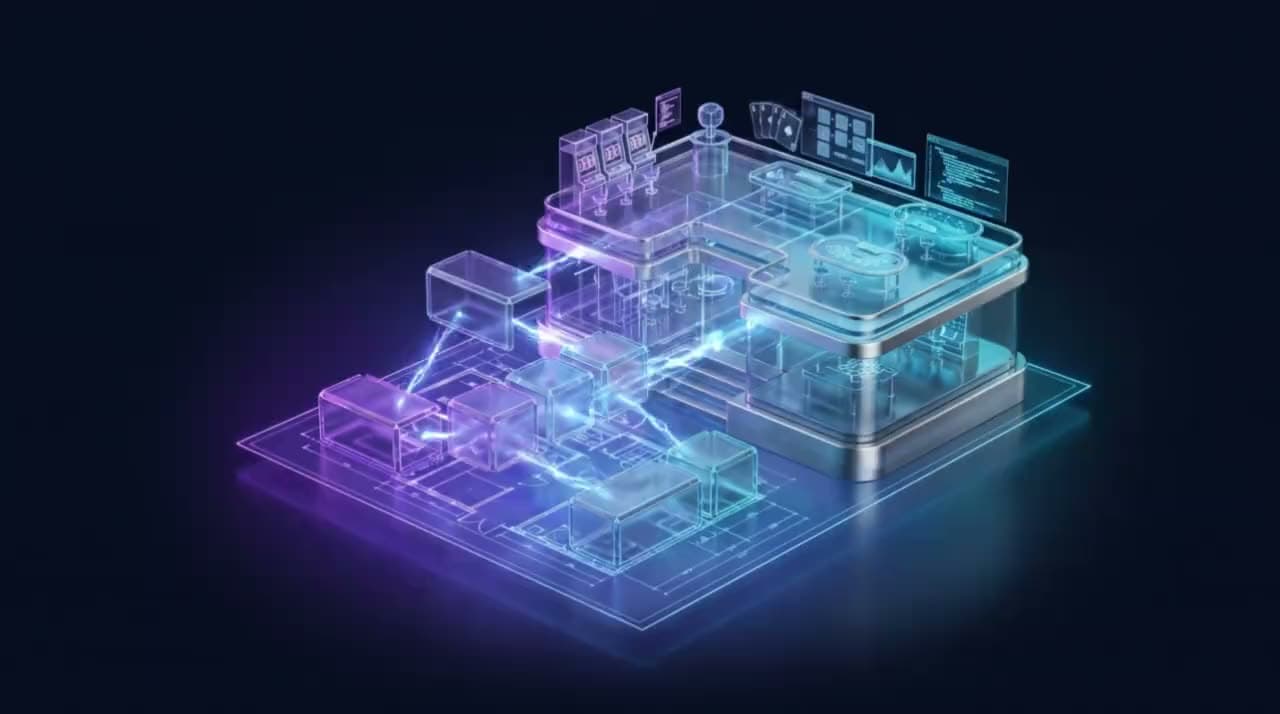
Custom casino games and payments architecture
Grow later

Expansion Modules Available on Request

Additional modules can be scoped for the first release or a later phase. Prioritize them by the operating need they solve and the dependencies they add to the platform.

  • VIP and loyalty features, with progression rules and operational controls defined in scope.
  • Tournaments and battle passes, including eligibility, scoring and reward logic.
  • Affiliate and referral tools, with tracking and commission requirements agreed.
  • Proprietary games, treated as a separately scoped product with its own development and testing work.
  • CRM, analytics and marketing integrations, based on the external systems and data flows you need.

An expansion request should describe the intended behaviour, staff workflow and data requirements. Review its effect on existing accounts, transactions and reporting before implementation. Staging feature releases makes it easier to understand what changed and verify that the core product still works.

How we work

The Custom Casino Development Process

The process turns business requirements into a specification, working software and an accepted release. Each stage has decisions and deliverables that can be reviewed before the project moves on.

01

Discovery

Map the business model, audience, markets, product requirements and current systems. Identify the decisions and external dependencies that affect delivery.

02

Specification

Document features, integrations, deliverables and acceptance criteria. Separate the first release from later ideas and agree how scope changes are handled.

03

Architecture

Define accounts, wallet data, service boundaries and integration flows. Review capacity assumptions and operational requirements before implementation.

04

UX/UI design

Design mobile and desktop journeys for players and staff. Approve key flows and edge cases before they become application code.

05

Development

Implement the frontend, backend and administrative features against the specification. Review progress through working increments and agreed checkpoints.

06

Integrations

Connect the approved game content and payment services. Confirm credentials, supported currencies, callbacks and third-party onboarding dependencies.

07

Validation

Run the agreed functional, transaction, load and security checks. Review defects against release criteria and record any outstanding items.

08

Release and handover

Deploy the accepted build, verify production configuration and transfer the agreed code, documentation and access. Confirm post-launch responsibilities.

Timeline

Custom Casino Development Timeline

A credible schedule starts with a release scope and the dependencies needed to deliver it.

A focused build may fit a one-to-three-month development window. The final delivery plan is established after discovery, with milestones for specification, design, implementation, integration and acceptance. A broader project or unresolved third-party onboarding may require more time. The main drivers are:

  • Integration scope: the number of services, API readiness and third-party onboarding dependencies.
  • Business rules: wallet behaviour, promotions, staff permissions and unusual player journeys.
  • Release depth: the difference between a focused first release and launching several bespoke modules together.

Keep a separate list of features for later phases and a clear approval process for changes. When a requirement moves into the first release, review the schedule and testing work it introduces. That keeps the launch date connected to the product being built.

Economics

Cost Estimation

The development estimate follows the specification. A useful proposal shows what is included, what depends on another supplier and how a change will affect cost. The estimate should cover:

  • A scoped estimate before development, based on the specification and agreed delivery assumptions.
  • A breakdown covering design, frontend, backend, administrative tools, integrations, testing and deployment.
  • Clear treatment of additional requests, third-party services and post-launch maintenance alongside the development price.
Why GameFlux

Ownership, Architecture and Project Delivery

Ownership defined at handover

The custom offering includes delivery of the project source code and agreed intellectual property rights. Identify those deliverables in the contract, alongside any third-party components whose licences continue to apply.

Architecture shaped around the product

Design account, wallet, content and operational systems around the requirements. Modular boundaries support future changes, while each new integration is still assessed for compatibility and testing needs.

Casino workflows in the specification

Translate payment exceptions, game transactions, promotions and staff responsibilities into concrete application behaviour. These details make the platform useful to the team running it, beyond the appearance of the lobby.

A documented delivery process

Use a written specification, progress reviews and acceptance criteria to keep decisions visible. A change to the first-release scope should come with a discussion of its effect on cost and schedule.

Ready to Start?

Bring the workflows that make your project different, the systems you already use and the ownership requirements that matter to your team. We can assess whether custom development is the appropriate starting point.

The next step is a briefing and a defined scope: what the first release includes, which integrations it depends on and what will be delivered at handover. From there, the team can prepare a component-level estimate and delivery plan.

Contact GameFlux

Acceptance, Handover and Long-Term Operation

The final deliverable is more than a live website. It should be an accepted application that your team can operate, maintain and develop after the initial project ends.

Agree what must pass before release

Define tests around real account and money flows. Include registration, permissions, game sessions, payment updates and promotion rules, with edge cases such as repeated requests or interrupted processing. Agree the environments, test data and evidence used for acceptance. Security and load assessment should have an explicit scope rather than an unspecified promise to test everything.

If the project replaces an existing casino, add a migration plan. Identify export permissions, map player and transaction records, reconcile balances and agree the cutover process. Migration changes the risk and work of the release, so it should be estimated and accepted separately from the new interface.

Make the handover usable

List the source repositories, design files, configuration instructions, deployment steps and operational documentation that will be delivered. Define how production access is transferred and which accounts remain with external suppliers. A receiving team should be able to understand the build and its dependencies without relying on undocumented knowledge.

Agree the post-launch support period and the process for defects, incidents and new features. Hosting, software maintenance, game content and payment processing can create ongoing costs even when the custom development is paid for. Planning these responsibilities early makes ownership useful in practice and gives the product a clear path beyond its first release.

FAQ

Frequently Asked Questions

When is custom casino software the right choice?

Custom development fits a project whose essential workflows or ownership requirements do not fit an existing package. It gives you a product specification tailored to the business, with the corresponding design, engineering and maintenance decisions. Compare it with turnkey if standard platform capabilities already cover most of your needs.

Do I receive the source code?

The custom offering includes delivery of the project source code and agreed intellectual property rights. The contract should identify repositories, design assets, documentation and other handover items. Third-party games, services and open-source dependencies retain their own terms; ownership of the application does not replace those arrangements.

How long does custom casino development take?

A focused project may fit the one-to-three-month delivery range discussed for this service, but scope and external dependencies determine the actual schedule. Integrations, unusual business rules and additional modules can extend it. GameFlux confirms milestones after discovery and specification rather than promising the same deadline for every build.

What determines the development price?

The estimate follows the agreed scope: design, application features, integrations, administrative tools, testing and deployment. Separate that development cost from hosting, content, payment services and ongoing maintenance. A phased roadmap can help you decide which features justify inclusion in the first release.

Can I add features or change suppliers later?

Yes, future development is part of the purpose of owning a custom application. The work still needs technical assessment: a new provider may introduce different APIs, transaction behaviour or data requirements. Plan the integration boundaries and documentation so another team can understand the system and make changes.

What happens after the platform launches?

Launch support and future development are discussed as part of delivery. Agree who monitors production, handles incidents, maintains dependencies and deploys changes, together with the coverage included in the support arrangement. Source-code handover alone does not provide ongoing hosting or operating support.